
Making real change in our lives is a long and slow process. We have to do small things every day to improve. While we’re in this process, it can feel like we’re getting nowhere, and it might be hard to stay motivated without tangible proof of us moving forward. A great tool for proving our progress is a habit tracker.
Let’s have a look at what a habit tracker is and how you can use one to build better habits.

What it a habit tracker
A habit tracker is a tool for creating better habits by tracking how long you’ve been doing them. All you have to do is note every day you successfully do or refrain from the habit you’re trying to change. Over time, you’ll grow a streak. The longer it gets, the bigger the consequences of breaking it seem, and you’ll be more likely to stick with your positive change.
There are no limits to which habits you can track. It can be used for everyday behaviors, such as making your bed in the morning, or rarer habits, such as doing laundry or cleaning. It can even be used to break bad habits and create new ones.
Related: What is a habit?
The benefits of using a habit tracker
Habit tracking is one of the best tools for creating long-term success, as it effectively helps you form better habits. Let’s have a look at some of the reasons why it’s so great.
1. It reminds you to act
Sometimes, we miss our good intentions by simply forgetting what we were supposed to do. A habit tracker can make it easier to remember.
When you track a habit, you’ll have to forget twice as many behaviors to miss a day. This makes you more likely to remember at least one of them. If your tracker is somewhere visible, such as in your calendar, you’ll have a physical reminder too.
2. It provides small wins
We can’t make progress without small wins, and they can be especially beneficial when we remember to celebrate them. A habit tracker is a great tool for both creating and celebrating these.
Every time you mark a habit successfully done, you get a mental boost. This is a small win. If you allow yourself to enjoy this feeling, you are celebrating it. As you do this, you’ll accumulate these wins, and you’ll begin to notice positive changes within yourself. You’ll start to improve your self-confidence, have an easier time staying focused on your task, and generally feel better about yourself and your abilities.
Related: How to reward yourself
3. It makes missing a day have immediate consequences
We often procrastinate or skip the things that can improve us because it seems like the easier option. There usually are no immediate consequences of doing this, and the alternative behavior often provides immediate gratification. A habit tracker can change this.
When your streak starts to grow, it’ll seem increasingly important to keep it going. You now know you’ll have to start over if you decide to skip a day. Suddenly, there’s an immediate consequence to missing a day, and you’ll quickly become less likely to do so. As a bonus, marking a habit successfully done is also a way to give yourself some quick gratification.
How to effectively use a habit tracker
As we already explored, a habit tracker is a tool used for sticking with positive habit changes. It works by marking every time you do or avoid the behavior you want to change. For every success, the streak grows. When you miss a day, you’ll have to start over.
Let’s have a look at how many habits you should track when to track them, where to do it, and some inspiration to help you track the right habits.
1. How many habits should you track
It takes time to make habit tracking a habit and to do the behavior. Therefore, I’ll recommend you limit it to your most important habits or to new, difficult habits.
It might seem natural to track the positive habits you already have going. And sure, they’ll bring you some small wins, but in the end, they won’t do much else than take away your energy from more important things. It’s usually better to save your energy for when you’re trying to do something new and difficult.
In the end, you should try to limit your tracking to only the most important behaviors. Usually it shouldn’t be more than 1-2 habits at a time. Once they become easier, you can begin to add new behaviors to your tracker.
2. When to track your habits
When you should track your habits depends on your preferences and routines. Let’s have a look at the 3 different times when you can do it and the benefits of each option.
Right after the habit
Most people find that tracking right after the habit is the most beneficial timing. It’s usually the easiest time to remember it, provides an immediate reward, and the small win feels more significant. Tracking right after the habit works best when you’re trying to form good habits, such as reading, meditating, and working out. It isn’t a great approach when trying to refrain from something.
In the morning
Another time for habit tracking is in the morning before you start your day. Going through how you did yesterday is a great way to start the day with a win or promise yourself to do better today.
Tracking in the morning works with any habit but is usually best for those that happen just before going to bed. This might be things such as watching porn or mindlessly scrolling through social media in bed.
Related: How to create a morning routine
In the evening
Going through the day that passed is a great way to prepare yourself for a good night’s rest. It’s a great time to analyze your day, which makes it a great time for habit tracking.
If you already have an existing evening routine, you might find that this is the easiest time to form the habit of tracking, as you can stack it on top of your current habits. It even works with all types of habits.
3. Where to track your habits
There are endless ways for you to create and use a habit tracker. Some are offline, and some will be analog. It’ll be individual what works for you and what doesn’t.
You’ll find some inspiration to where you can track your habits effectively and find a free Google Sheets template below.
Habit tracker journal
A habit tracker journal is the most advanced type but also the most beneficial. It combines a tracker with a place to reflect on why you succeeded or why you didn’t. Here’s how you can create your own with just a notebook.
- Write the current date at the corner of your notebook
- Write a sign next to the date indicating either success or a missed day
- Next to the sign, you’ll note how long your streak has been running. If it’s your first day, write 1.
- Use the space below to reflect on your habit that day. Did you do it? How was it? How much did you do? How did it feel? Feel free to add anything you find relevant here.
The journal can make it easier to stick with good habits and understand why you fail. Both can help you reach your long-term goals.
A classic habit tracker
A classic habit tracker is a template that looks similar to a calendar. Under every day, there’ll be a small space for you to color depending on how the habit went.
This approach is simple and takes no more than a few seconds. It gives a visual representation of the streak growing, can be hung on the fridge, and provides a mark to aim for.
A habit tracker calendar
A simple and cost effective way to create your own habit tracker, is to use a calendar.
Write down the habits you wish to track, as you normally would other tasks in a calendar. When you do the behavior, you can write a small sign indicating success next to it, including the day of your streak.
A habit tracker calendar works especially well for reminding you to do the habits.
Post its on the mirror
One of my personal favorites is hanging Post-its on the bathroom mirror. It’s simple, you’ll be reminded every time you go to the bathroom, and you’ll be able to look yourself in the eye. Both when you succeed or fail.
All you have to do is create a small mark on the Post-its every time you succeed. This gives a visual representation of your progress for you and anyone who enters your home to see.
Google sheets/Excel
Google sheets or Excel is a great place to make a digital habit tracker. It’s simple and can accessed from your phone. You can easily make your own.
Write down the habit you want to track on the left side. Note the date above and then mark the fields each day with colors either signaling success or failure.
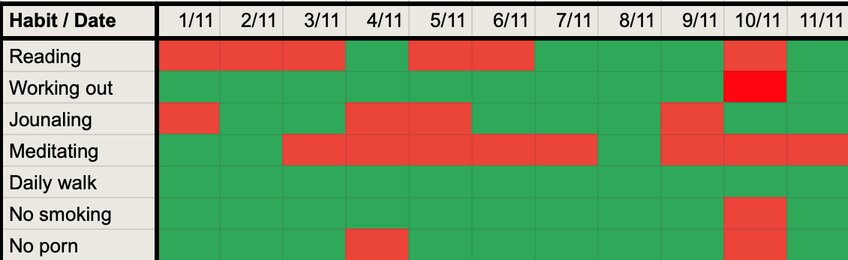
If you want to make the use of google sheets even more effective, you can write a small, simple note about how you did that day. You could track pages read, miles run, minutes spent studying, or something that applies to your situation. You can use the image above as inspiration.
Alternatively, you can find a free habit tracker in Google sheets below. To use the tracker, you have to copy the template and insert it into your own sheet.
Habit tracker apps
A popular habit tracker option is to find an app that helps you. The benefit of using an app for this is that they are programmed to increase your chance of success on a device you’ll be carrying most of the time. They provide you with a streak, notifications to remind you to act, and much more. There are several options for picking a habit tracker app, but 2 of the most popular are Strides and I am sober.
Strides: Goal tracker
Strides is a simple app that helps you stay on track with your habits. It has a long list of habits to select from but allows you to add additional behaviors. You can see your progress and follow as your streak grows. It can even act as a reminder with timed notifications.
The free version won’t allow you to track more than three habits. This forces you to be selective and only track the important habits.
I am Sober
I Am Sober is my favorite app to get rid of bad habits. It has a wide range of bad habits to track and offers numerous helpful features. You can follow your streak, resources saved, create pledges to yourself, and much more.
4. Which habits should you track?
There are no habit too small to track. If they’re important to you, they’ll be worth tracking. That being said, the more impactful a habit has, the more effort it requires. That’s why it’s recommended that you primarily track keystone habits. Some examples of positive keystone habits are:
- Working out
- Meditating
- Journaling
- Reading
- And many more
A habit tracker can also be used to help you break bad habits. A few example of those are:
- Mindlessly scrolling on social media
- Binge eating
- Snoozing
- Smoking
- And much more
Related: The best habits for self-improvement
What happens if you break the streak?
Most streaks are broken at some point. You might get sick, your schedule gets messed up, or something else. One missed day won’t have an impact on your long-term results. How you react will.
Don’t beat yourself up. Accept your circumstances and get back the next day. Begin to rebuild your streak and set a goal to beat your previous best.
A missed day might even help you improve your approach. You can make sure you won’t do it again if you know why it happened and if it’s something you can control. Maybe you have been pushing yourself too hard, not appreciated your efforts enough, or tried to do too much at once. Whatever the reason is, knowing why can make it easier in the future.
Take away
A habit tracker is a tool that lets you keep track of your existing habits. It helps you stick with them while you watch your streak grow. It does so by creating small wins, reminding you to act, and creating an immediate consequence of missing a day.
Try the different formats and approaches and see what works for you. It might be difficult at first. But as you find something that works for you and gets into the habit, it’ll be an invaluable tool.
What to read about next

- Mindset and Discipline: The Foundation of Sustainable Change - March 4, 2026
- Thinking Vs. Reflection – What is the difference? - February 20, 2026
- Why we do things we later regret – and how to interrupt the pattern - February 13, 2026